


Updated November 2026
A tracksuit is the part of the kit people see most. Players wear it to travel, to warm up, on the bench and in the team photo. It also gets washed and worn hard, week after week.
So a cheap looking or badly fitting set is hard to hide. The good news is that most problems come from a few decisions made early in the order.
This guide walks club secretaries, coaches and brand owners through those decisions for custom team tracksuits: what the set is for, which fabric suits it, how to check the build, how to collect sizes and how long to allow.
In this guide
- The Short Answer
- Start With the Job the Tracksuit Has to Do
- Fabric and Weight: What to Ask For
- The Build Details That Separate a Good Set From a Poor One
- Branding Your Tracksuits
- Getting Sizes Right the First Time
- Plan Backwards From the Date You Need Them
- Minimum Order and Mixed Sizes
- Matching Colours Across Teams and Reorders
- Building a Full Club Range
- What Affects the Price
- Caring for Team Tracksuits
- Frequently Asked Questions
- Ready to Kit Out Your Squad?
The Short Answer
- Decide first what the tracksuit is for: training, travel or match day warm up.
- Choose the fabric for that job, then the weight within 250 to 400 GSM.
- Check four build details: side seams, zips, cuffs and stress points.
- Collect sizes from a sample set, not from guesses.
- Work back from the date you need the kit, and add time for a sample.
Start With the Job the Tracksuit Has to Do
The word “tracksuit” covers very different garments. Wikipedia notes that the tracksuit is also called a warm up suit, or “warmups” for short. In practice clubs buy it for three main jobs.
| Use | What players need | Fabric that usually fits |
|---|---|---|
| Training and warm ups | Stretch, breathability, quick drying | Knitted polyester or a moisture wicking poly knit |
| Travel and walk out | A smart look, wind protection, pockets that close | A smooth woven or knitted shell, often with a mesh lining |
| Cold sidelines and casual wear | Warmth and comfort | Cotton and polyester fleece |
Many clubs want one set to do everything. That can work, but it is a trade off.
A warm fleece set will feel heavy in a hard warm up, and a light training top will not keep a substitute warm in winter.
If the budget allows only one set, pick the job that matters most to your club and choose the fabric for that.
Fabric and Weight: What to Ask For
Our custom team tracksuits are made in polyester, cotton and polyester blends, fleece and moisture wicking fabrics, in weights from 250 to 400 GSM. Here is what each choice means for players.
Knitted Polyester
Polyester is the workhorse of training wear. An Ohio State University clothing fact sheet describes it as having “good abrasion resistance,” and being “resilient, easy care, and quick drying.”
The same source notes the trade off: 100% polyester absorbs little moisture, so it can feel less comfortable next to the skin than a blend. A soft brushed back or a breathable lining helps.
Tricot and Smooth Knits
Tricot is a fine knit, usually made from synthetic yarns. It gives the smooth, slightly shiny face many people picture when they think of a classic club tracksuit.
The Ohio State fact sheet notes that tricot with a fleece back keeps a smooth outer surface, and that tighter knits hold their shape better. Ask for a tight, stable knit if the jacket will be worn for years.
Fleece and Cotton Blends
The same fact sheet calls knitted fleece “the most common fabric used for warm-ups or sweatsuits.” Fleece is warm and soft, which makes it a good choice for cold weather and casual club wear.
If you are deciding between brushed fleece and an unbrushed loopback, our guide to French terry fabric explains the difference in warmth and breathability.
How Heavy Should It Be?
| Weight | How it feels | Good for |
|---|---|---|
| Around 250 GSM | Light and easy to move in | Training tops and spring or summer sets |
| Around 300 GSM | Balanced, with more body | All season club tracksuits |
| Around 350 to 400 GSM | Warm and structured | Winter sets and casual wear |
Weight is only part of the picture. Fabric type, knit and finish change how a set feels, so always judge the sample, not just the number on the spec sheet.
Looking for lower impact options? Our article on recycled polyester sportswear covers what recycled fibres can and cannot do.
The Build Details That Separate a Good Set From a Poor One
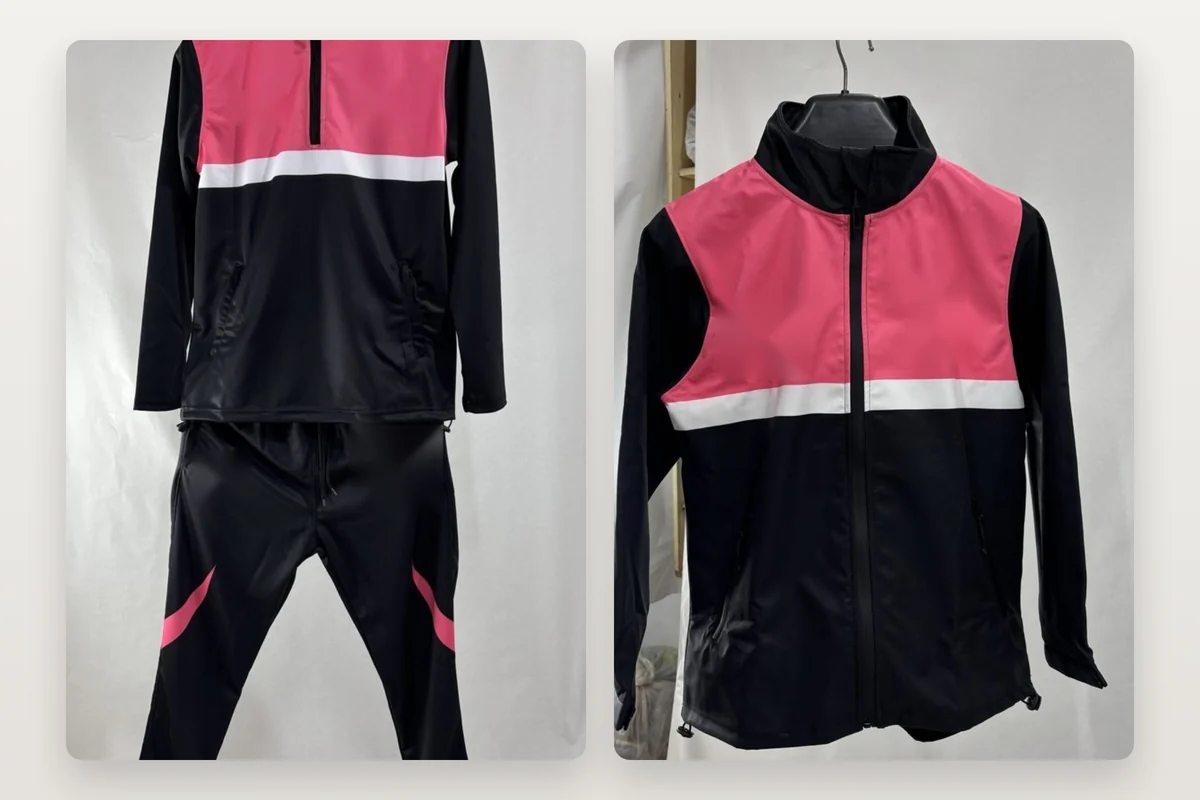
Two tracksuits can look the same in a photo and wear very differently. Check these four areas on every sample of custom team tracksuits.
1. Side Seams That Hang Straight
Hold the jacket and pants up by the shoulders and waist. The side seams should run straight down, not twist around the body.
The Ohio State fact sheet is clear about why this matters: “If the garment is twisted, it will remain out of shape even after laundering.” A twisted sample is a reason to stop and ask questions.
2. Zips That Suit the Job
Jacket zips need to open at the bottom so players can put the jacket on. The American Sewing Guild explains that jacket zips “separate at the bottom.”
It also notes that sizes #3 to #5 are the ones most often used for garments.
The number roughly matches the width of the closed teeth in millimetres. For a full zip training jacket, ask what size and type of zip is used, and test the pull many times on the sample.
3. Cuffs, Hems and Ribbing
Look at the cuffs, the hem and the collar. Ribbing should be even in width all the way round and should spring back after a stretch.
Loose, wavy cuffs on a new sample usually get worse with wear. Ask for a firmer rib if the sample feels slack.
4. Seams and Stress Points
The fact sheet notes that quality seams in knits are “serged (overcast) or zig-zagged to lie flat, yet have give.” Gently stretch a seam on the sample. It should move with the fabric, not crack or pop.
Also look for reinforcement where tracksuits fail first: pocket corners, the bottom of the zip and the crotch seam on the pants.
Branding Your Tracksuits
We offer embroidery, screen printing, sublimation, heat transfer and private label finishing on our tracksuits. Each suits a different part of the design.
| Method | Best for | Watch out for |
|---|---|---|
| Embroidery | Club crest on the chest, small logos | Very fine detail can be lost in thread |
| Screen printing | Bold back prints and simple logos | Each extra colour adds a screen |
| Sublimation | All over patterns and full colour panels | Needs polyester fabric |
| Heat transfer | Names, numbers and initials | Placement must avoid seams and zips |
A common and practical mix is an embroidered crest on the chest, the club name printed across the back and player initials on the chest or pants.
For more on how sublimation works on polyester, see our guide to custom sublimated jerseys for teams.
Send your logo as a vector file with Pantone colour codes. That gives the best chance of a sharp result and a close colour match.
Getting Sizes Right the First Time
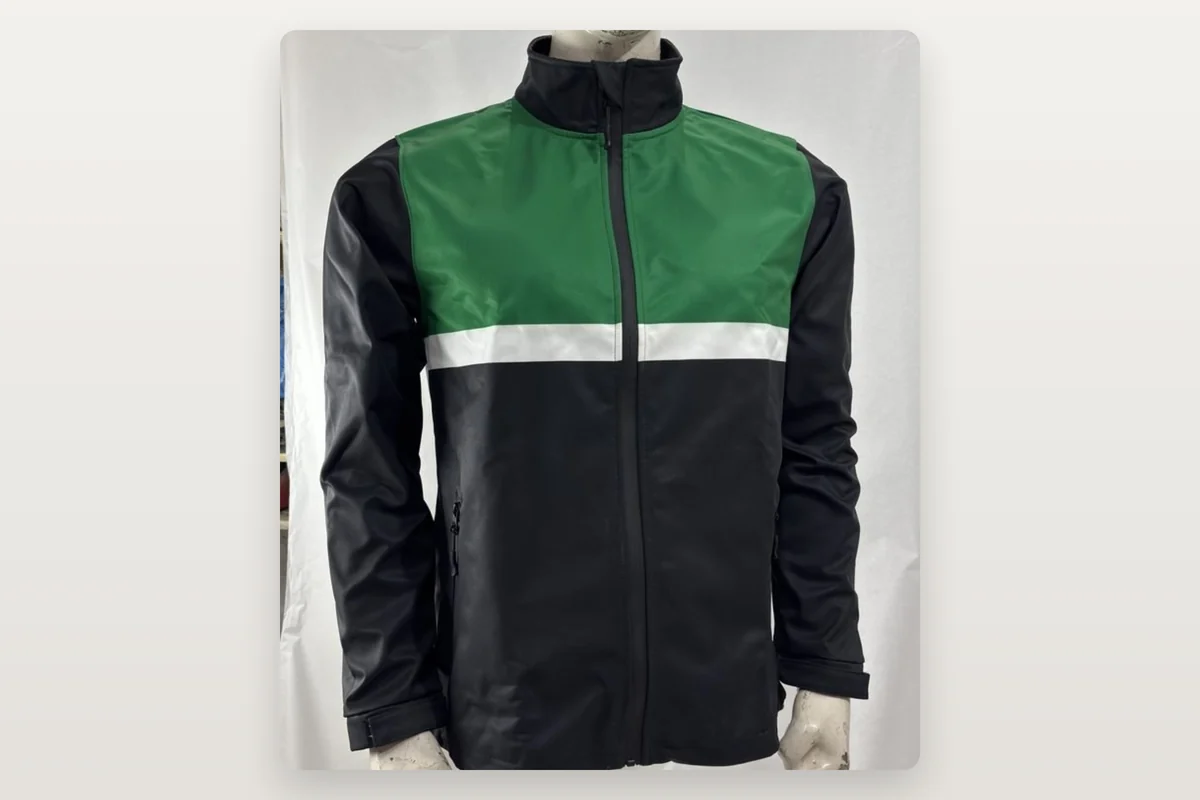
Sizing is where many club orders go wrong. Sizes also differ from one maker to another, so the Ohio State fact sheet advises comparing pant length, arm length and roominess rather than trusting the label.
Our custom team tracksuits come in XS to XXXL, with custom sizes available. A simple process avoids most mistakes:
- Ask for a size set or samples. Let players try a jacket and pants in their usual size before you order.
- Collect sizes in one place. Use one spreadsheet with each player’s name, jacket size, pant size and any initials.
- Check junior sizes with care. Children grow quickly, so some clubs size juniors up one step. Agree this with parents first.
- Order a few spare sets. New players often join after the order goes in.
- Confirm fit style. Slim, regular and relaxed fits feel very different on the same chest size.
Our tracksuits come in regular, slim and relaxed fits, so say which you want in your brief.
Plan Backwards From the Date You Need Them
The simplest way to avoid late kit is to start early. Plan custom team tracksuits backwards from your first match, tournament or presentation night.
| Stage | What happens | Time to allow |
|---|---|---|
| Brief and quote | Send style, fabric, logo, colours and rough quantity | We usually reply within one working day |
| Mockup | Free digital mockup, with changes until you are happy | Depends on how quickly you give feedback |
| Sample | Physical sample to check fit, fabric and build | Ask for the sample timeline in your quote |
| Production | Bulk production after you approve the sample | 12 to 21 days |
| Shipping | Worldwide delivery | 5 to 10 working days, as listed on our tracksuit pages |
We suggest allowing about two months from first message to delivery. If your date is fixed, start earlier and leave room for a second sample.
Minimum Order and Mixed Sizes
The minimum order for our tracksuits is 20 to 50 sets, depending on the design and the level of customisation. Sizes can be mixed within that quantity.
That makes custom team tracksuits realistic for a single squad, not just a large club. A simple design with one logo sits at the lower end, while a design with many colours or decoration methods may need more sets.
If your club has several age groups, one shared design across all teams is often the easiest way to reach the minimum and keep the club looking consistent.
Matching Colours Across Teams and Reorders
A club often orders custom team tracksuits for new players a season later. The new sets need to match the old ones side by side.
- Keep one master design file with fixed Pantone codes.
- Approve colour on the physical sample in daylight, and keep that sample.
- Ask your supplier to keep your design on file for top up orders.
- Order top ups early, so the new batch can be checked against your reference.
Our colour and Pantone guide explains how colour matching works for custom apparel.
Building a Full Club Range
A tracksuit rarely travels alone. Many clubs order matching items in the same colours, so the whole squad looks the same on match day.
- Match kit: see our guides to ordering custom football kits and rugby kits for amateur clubs.
- Training extras: hoodies and sweatshirts and joggers.
- Finishing touches: sports socks in club colours.
- Clubs and schools: our local club kits and school and college sports kits.
Putting the whole range in one brief makes it easier to keep colours consistent across items.
What Affects the Price
We do not publish a single price, because every club order is different. These factors change the cost of custom team tracksuits the most:
- Fabric and weight: heavier and technical fabrics cost more.
- Panels and colours: more panels and colour blocks mean more cutting and sewing.
- Decoration: each method and position adds cost, and personalised initials add per piece work.
- Extras: zipped pockets, ankle zips, hoods and linings all add time.
- Quantity: larger runs usually lower the cost per set.
When you compare quotes, compare the full spec, not just the headline price. A cheaper set with a twisted seam or a weak zip often costs more in the end.
Caring for Team Tracksuits
Good care keeps colours bright and shapes straight. These are the care instructions on our tracksuit pages:
- Machine wash cold.
- Do not bleach.
- Tumble dry low, or air dry.
Two habits help too: close the zips before washing so the teeth do not snag other items, and turn printed or embroidered pieces inside out.
Frequently Asked Questions
These are the questions clubs ask us most about custom team tracksuits.
What is the difference between a tracksuit and a warm up suit?
In everyday use they mean the same thing: a jacket and matching trousers. “Warm up suit” or “warmups” is simply another name for a tracksuit.
Which fabric is best for a team tracksuit?
It depends on the job. Knitted polyester suits training, a smooth shell suits travel and walk outs, and fleece suits cold sidelines and casual wear.
What GSM should a club tracksuit be?
Our tracksuits range from 250 to 400 GSM. Lighter weights suit training and warm weather, and heavier weights suit winter and casual wear. Judge the sample, not just the number.
What is your minimum order for tracksuits?
Our minimum is 20 to 50 sets, depending on the design and customisation. You can mix sizes within that quantity.
Can each player have their initials or number?
Yes. Send one spreadsheet with each player’s name, sizes and initials or number, and each set is personalised to match.
Can we mix adult and junior sizes in one order?
Yes. Our sizes run from XS to XXXL, with custom sizes available. Check junior sizes carefully, as children grow quickly.
How long does an order take?
Bulk production takes 12 to 21 days after sample approval. Shipping is listed at 5 to 10 working days on our tracksuit pages. We suggest allowing about two months in total.
Can we order matching items with the tracksuits?
Yes. Many clubs add hoodies, joggers, socks and match kit in the same design. Put them in one brief so colours stay consistent.
How do we wash team tracksuits?
Machine wash cold, do not bleach, and tumble dry low or air dry. Close the zips first and turn decorated pieces inside out.
Ready to Kit Out Your Squad?
The best custom team tracksuits start with a clear job, the right fabric, a sample you have checked and a timeline that leaves room for changes.
Browse our tracksuits range, then send your style, logo, colours and rough quantity through our quote form. We will send back a free mockup, a price and a timeline.
Our range includes custom tracksuits, tailored tracksuits with logos and embroidery, premium tracksuits for men and women, wholesale tracksuits for brands, high quality tracksuits and bulk tracksuits for export.
About this guide
Written by Hamasah Tayyaba and reviewed by Muhammad Abdullah Hamas. Sialwear facts in this guide come from our tracksuit product pages. Other facts are linked to their sources below.
Sources
- Ohio State University, Selecting Sweatsuits, Fleece Separates and Warm-Ups (clothing fact sheet)
- American Sewing Guild, The Zipper Files
- Wikipedia, Tracksuit
